

 ES
 EN
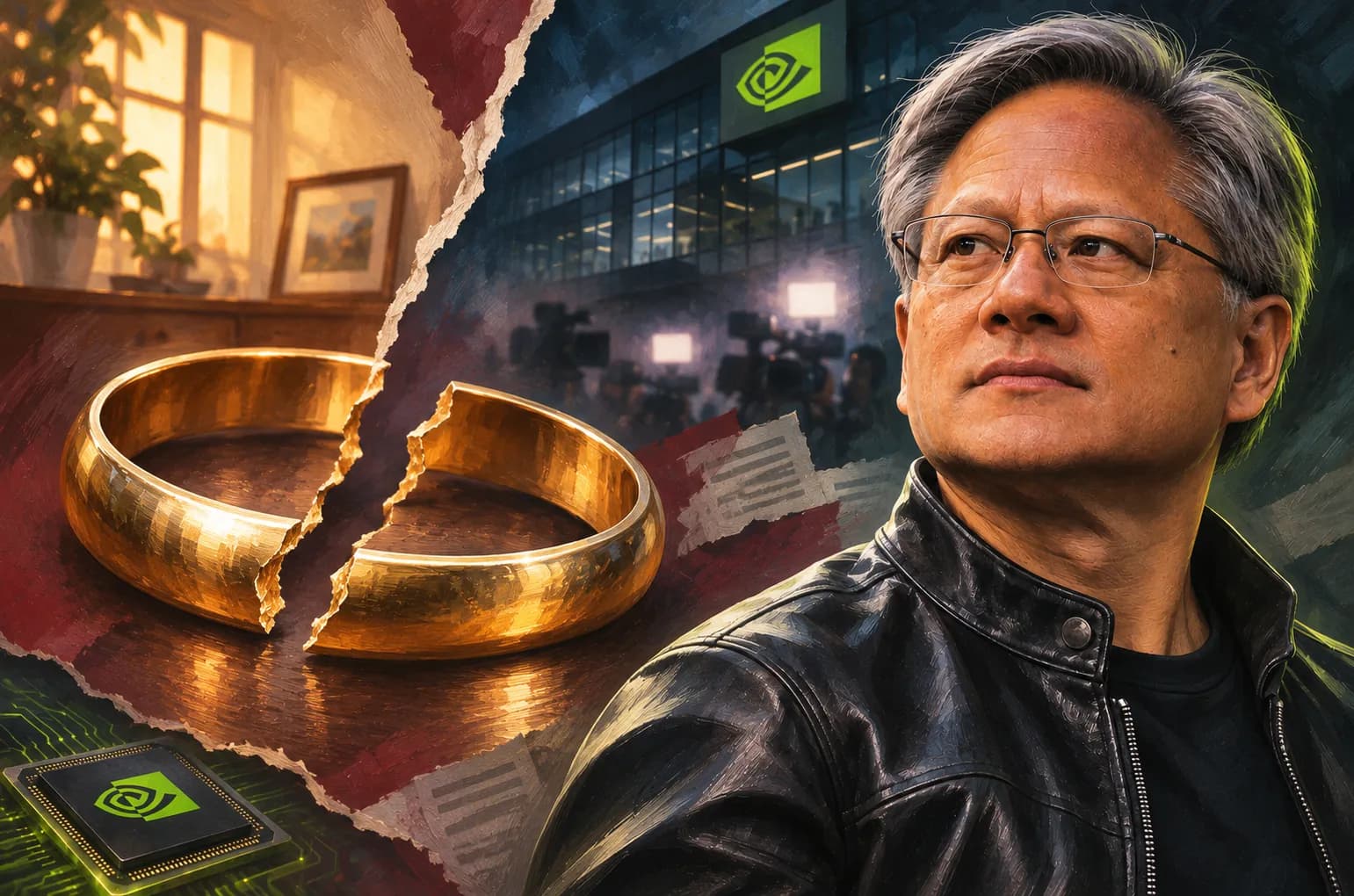
Two weeks ago, almost nobody was talking about the private life of the man in the leather jacket.
Today, November 11, 2026, Nvidia's board is meeting to decide whether Jensen Huang stays at the head of the company he founded in 1993.
Yes, we're talking about the same company that makes the chips powering a huge part of the world's artificial intelligence.
The question everyone is asking is simple:
Can Nvidia keep running without Jensen Huang?
How It All Started
In late October, The New York Times reported that U.S. intelligence agencies believed Alice Huang, an executive at Megaspeed, was passing information to Beijing.
Megaspeed is a Singapore-based data center company and an Nvidia customer. According to the same paper, it has bought more than $4.8 billion worth of Nvidia chips over the past two years.
Here's the sensitive part: according to the report, Alice Huang had a close relationship with Jensen Huang. Heads up, they share a last name but they're not related.
Nvidia responded that meeting with customers is part of a CEO's job and that Jensen talks to thousands of customer executives every year. China also denied the allegations.
Sunday, November 8: Huang Admits It
On Sunday, Huang wrote to all employees and acknowledged that he had been unfaithful to his wife.
The same day, the board announced an independent investigation. It's led by a committee of independent directors working with outside counsel.
The board made one thing clear: it says it has no reason to believe national security or company secrets were compromised.
Huang said he is cooperating fully with the investigation.
And right in the middle of it all, Donald Trump publicly came to his defense. He called Huang an honorable guy.
Monday and Tuesday: "Business as Usual" (or at Least They Tried)
On Monday, Huang walked into the Santa Clara headquarters and ran his usual meeting with top executives as if nothing had happened.
According to CNBC, employees described the mood as sad.
The stock market didn't pretend everything was normal. Nvidia shares fell roughly 9.5% between Monday and Tuesday.
Wednesday: The Second Bombshell
Today the scandal took another turn.
The New York Times reported a second extramarital relationship, this time with Kimberly Powell, Nvidia's vice president of health care. This is a press report, and the company has not confirmed it.
Minutes later, The Wall Street Journal reported that the board is preparing to remove Huang and could meet as soon as today.
On that news, the stock dropped between 8% and 9% in after-hours trading.
As we write this, no official decision has been announced.
What Wall Street Is Saying
Analysts have already started to move:
- Baird downgraded Nvidia to neutral.
- Morgan Stanley removed it from its top picks list, though it keeps an overweight rating.
- Bank of America dropped it from its "U.S. 1" list.
- Wells Fargo and Citigroup cut their price targets.
In the first two sessions after the news, the company lost more than $427 billion in market value.
Still, most analysts remain optimistic. According to LSEG, 59 of 64 firms rate it a buy, and the median price target sits around $314.
In other words: Wall Street believes in the business, but doesn't know what happens if Jensen leaves.
The Real Problem: A Company That Depends on One Person
Huang is 63 and has been CEO for more than three decades.
In all that time, Nvidia never announced a formal succession plan.
Back in January at CES, he joked that the secret to lasting this long as CEO is not getting fired and not getting bored.
Today that line sounds different.
In the markets this is called key-person risk: when a company's value is so tied to its leader that losing him can shake the whole business.
Why Should You Care, Even If You Don't Own Stock?
Because almost all the AI you use today runs on Nvidia chips.
The models that generate text, images and code, the data centers of the big tech companies and a large part of AI research all depend on its GPUs.
On top of that, Huang had long been pushing Washington to ease restrictions on selling advanced chips to China. That's why this case is also being treated as a national security and tech policy issue, not just a personal scandal.
If Nvidia's leadership changes, the strategy of one of the most important players in the whole industry could change too.
What We Still Don't Know
A few things are worth keeping straight before jumping to conclusions:
- The allegations about Alice Huang come from anonymous sources cited by the press. Nvidia and China dispute them.
- The board said it sees no sign that secrets or national security were compromised.
- Huang's removal is, for now, a Wall Street Journal report, not an official announcement.
- Nobody knows yet who could replace him.
Conclusion
This story mixes technology, politics, money and private life, and it's still being written.
It could end with Jensen Huang out of the company he built, or with a board that decides to keep him after the investigation.
What's certain is that Nvidia is no longer just a chip company. It's a central piece of the AI economy, and every decision about who runs it is felt around the world.
We'll keep following this story closely.
This article is for informational purposes only and is not financial advice.
Sources: The Hill, CNBC, TechCrunch, Bloomberg, Fox Business, Japan Times and the NVIDIA Board of Directors statement.
 Velozen Hosting